
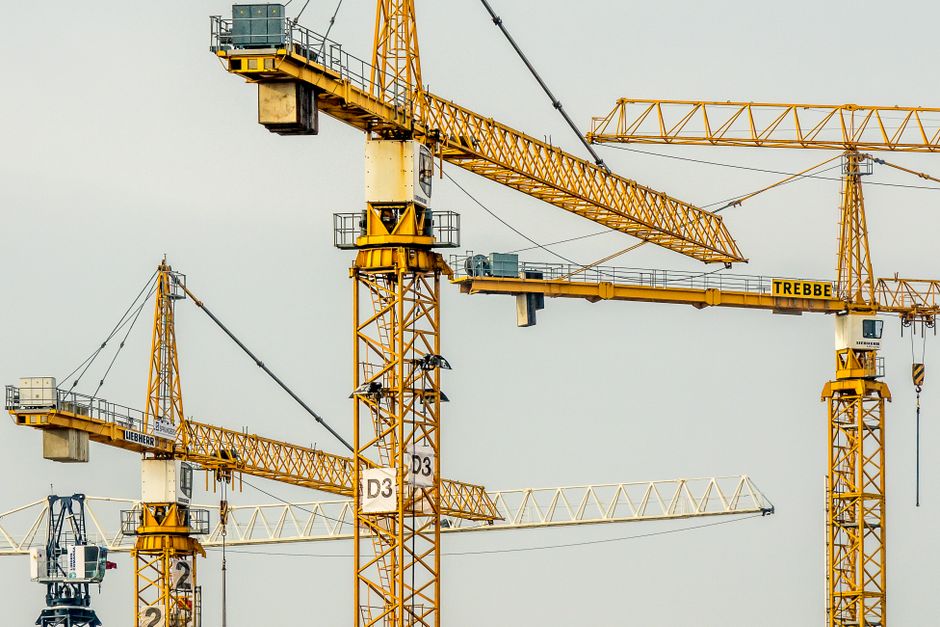
Construction is the process involved in delivering buildings, infrastructure, industrial facilities and the associated activities that continue through to the end of a project’s life. In Australia, that work sits inside a framework that includes the National Construction Code, the country’s primary set of technical design and construction provisions for buildings. For the businesses doing the work, from national contractors to sole trader chippies, risk turns up every day the site gate opens. Insurance is how that risk gets managed, priced and paid for when something goes wrong.
What construction work looks like in Australia
The industry covers far more than new houses. It takes in commercial builds, civil and infrastructure projects, industrial facilities, fitouts, refurbishments, demolition and ongoing maintenance. The Australian Constructors Association represents leading construction and infrastructure contracting companies, while large digital-first contractors service public and private sector clients and government departments. At the smaller end, the same risks are carried by renovators, concreters, electricians, plumbers, roofers, landscapers and the many subcontractors who move between projects each year.
Government policy settings shape how that work is delivered. The Department of Industry, Science and Resources, whose policy functions transferred to the Treasury in May 2025, works to ensure Australia’s building and plumbing industries are safe, accessible and sustainable. The National Construction Code is a performance-based document, which means projects are judged on outcomes rather than a single prescribed method. That flexibility matters commercially, but it also means documentation, contracts and quality systems carry real weight when a dispute or a claim arises.
Why cover matters more when the market is tight
A report published on realestate.com.au in September 2026 warned that a wave of construction firm closures threatens Australia’s national housing target, with industry confidence falling and business survival rates dropping to their lowest level. Whatever part of the supply chain you sit in, that environment changes how a business has to think about risk. Thin margins leave no room for an uninsured injury claim, a defect dispute, a stolen excavator or a fire in a partially completed building.
Insurance does not fix a difficult trading market. It does stop a single event from becoming the reason a business stops trading altogether. A public liability claim from a member of the public, a contractual demand over damage to someone else’s property, or the cost of replacing hired plant after a theft can each run into figures that a small contractor cannot absorb from working capital. The practical question is not whether cover is worth having, but which covers match the work being done.
The core covers for a construction business
Construction insurance is rarely one product. Most programs bundle several covers so that different losses are answered by the right section of the policy. The table below sets out the categories commonly used in the industry and what each one is designed to respond to.
Cover type | What it is designed for |
|---|---|
Public and product liability | Claims from third parties for injury or property damage connected to your work or your products |
Contract works | Damage to the works under construction, including materials on site |
Plant and equipment | Owned, hired or leased machinery, tools and site equipment |
Business interruption | Lost income and added costs following an insured event |
Management liability | Claims against directors, managers and the business itself |
Professional indemnity | Claims about advice, design, certification or professional services |
Cyber | Data breaches, system interruptions and related response costs |
Trade credit | Losses when a customer or debtor does not pay |
Motor and marine transit | Vehicles, and goods or equipment being moved between sites |
Which combination applies depends on the risk. A residential builder with subcontractors, hired plant and a display home has a different profile to a civil contractor moving heavy equipment between regional sites. The wording of each section also varies between insurers, so the definitions matter as much as the label on the cover.
How insurers assess a construction risk
Underwriters look at a construction business as a moving set of exposures rather than a static one. The information provided at quote stage drives both the price and whether cover is offered at all. The details that carry the most weight typically include:
-
The type of work being done, from residential renovations to civil infrastructure
-
Contract values and the largest single project expected during the policy period
-
How subcontractors are used, and whether they hold their own cover
-
Plant, equipment and tools, including anything hired in
-
Work health and safety systems, inductions and site documentation
-
Claims history, including incidents that were resolved without a payout
-
Licensing, qualifications and trade experience
-
Contract conditions you have signed up to, including indemnities and warranties
Incomplete disclosure is where many builders come unstuck. If a business takes on a larger project, moves into a new category of work or starts using subcontractors for the first time, the insurer needs to know. A policy that was accurate when it was written can be tested at claim time if the business has since changed shape.
Where a broker earns their fee
Construction risks are not uniform, and placing them well takes market access. Business Insurance Consulting is a Brisbane-based brokerage led by Craig Graham, with 28 years of experience and access to more than 150 specialty markets. The insurer panel includes CGU, QBE, Vero, Allianz, AIG, Chubb, Zurich and NTI, and the business operates through Community Broker Network with Steadfast membership and a NIBA affiliation.
That matters when a risk is unusual. Tilt-up, height work, demolition, asbestos-adjacent refurbishment and high-value civil plant all sit differently with different underwriters. A broker who writes construction regularly knows which markets will look at a particular trade, what information they need, and where the wording gaps tend to appear. Placing the cover is only part of the job. The other part is explaining what is and is not insured before a claim happens, in plain English.

Claims are where insurance is judged
Most construction claims start with a phone call. Someone is injured, a wall is damaged, equipment disappears from a locked site, or a client alleges defective work. What happens in the first few days often shapes the outcome. Incident details, site photos, toolbox records, contracts, delivery dockets and correspondence all become evidence.
A broker’s role at that point is advocacy rather than paperwork. That means notifying insurers promptly, presenting the facts clearly, tracking the assessor, and pushing back if a claim is read too narrowly. For a builder with a crew standing idle, speed matters as much as the settlement figure.
Common gaps that catch builders out
Many claims problems trace back to the same handful of oversights:
-
Contract values understated at renewal, leaving the largest job underinsured
-
Subcontractors assumed to hold cover, with no certificates collected
-
Hired plant and equipment not listed on the policy
-
Tools left overnight in vehicles or on unsecured sites
-
Cover allowed to lapse between jobs, breaking continuity
-
New work categories added without telling the insurer
-
Old policy schedules kept on file instead of current ones
Getting cover sorted in Queensland
Requirements differ by state and territory, by the type of work and by what your contracts demand, so it pays to confirm your obligations with the relevant authority before you rely on any general summary. For Brisbane and Queensland builders, working with a local brokerage means the conversation happens with someone who understands the local market, the trades doing the work and the contract conditions that turn up again and again. It also means having an advocate in your corner if a claim goes sideways. If you are reviewing cover for an existing business or setting up insurance for a new one, start with a clear picture of the work you actually do.
Frequently Asked Questions
Does a construction business legally need public liability insurance?
The answer depends on your state or territory, the type of work you do and the contracts you sign. Many clients and head contractors require proof of cover before allowing a trade on site. Rather than assume, check your obligations with the relevant authority and confirm what your contracts specify, then arrange cover that matches both.
What is contract works insurance?
Contract works cover responds to damage to the project itself while it is being built, including materials delivered to site. It sits alongside public liability rather than replacing it. The scope depends on the insurer and the wording, so it is worth reading how the policy treats incomplete work, existing structures and materials stored off site.
Can I get cover if I use subcontractors?
Yes, and it is common. Insurers typically want to know how many subcontractors you engage, what trades they perform and whether they hold their own policies. Collecting current certificates of currency before work starts protects you if a subcontractor’s insurer later disputes a claim, and it keeps your own policy conditions satisfied.
How often should I review my construction insurance?
At least once a year, and any time the business changes. A new category of work, a significantly larger project, new plant, a change in subcontractor arrangements or a business restructure are all reasons to revisit the policy. Waiting until renewal can leave a gap that only becomes obvious when a claim is lodged.
What happens if my policy lapses between jobs?
A lapse can affect cover for claims that arise later, particularly where the alleged work was done during the uninsured period. It can also affect your claims history and how future insurers view the risk. If a lapse has already happened, speak to a broker about how to reinstate cover and close the gap properly.