Public and products liability insurance covers legal costs and compensation when your business activities cause injury or property damage to a third party, or when a product you supply causes harm. It sits quietly in the background of your insurance program until something goes wrong, and then it matters more than almost anything else you hold.
For Brisbane businesses, the risks that trigger claims are usually ordinary rather than dramatic. A customer slips near your counter. A visitor trips over equipment on a site. A batch of goods you imported causes an injury months after it left your warehouse. Public and products liability insurance is built for exactly these moments.
What public and products liability insurance actually covers
Public liability insurance may protect your business from the financial consequences of third-party injury, property damage or other loss. In practice, it responds to the financial risk of third-party bodily injury or death, and third-party property damage or loss, along with the legal costs of defending a claim and any compensation you may be required to pay.
Product liability insurance handles a different part of the same problem. It is designed to protect your business if you are sued because a product you sell, assemble or supply has caused harm to a person. That makes it relevant to manufacturers, importers and sellers, and to anyone in the supply chain who puts goods into the hands of the public.
Combine the two and you have cover for a wide range of business mishaps, legal costs and compensation payments resulting from accidents. Public liability responds to what happens in and around your operations. Product liability responds to what happens after your product leaves your hands.
Public liability and product liability side by side
The two sections often sit inside one policy, but they respond to different events. Reading them together makes it easier to see where the gaps would be if you only held one.
| Cover | What it responds to | Typical trigger |
|---|---|---|
| Public liability | Third-party injury, death, property damage or loss connected to your business activities | A customer slips, trips or falls on your premises |
| Product liability | Harm caused by a product you sell, assemble or supply | A supplied item injures someone after purchase |
| Public and products liability together | Legal costs and compensation arising from a wide range of business mishaps | A claim that could fall under either section |
The risks that generate claims are usually small
Public liability insurance is designed to protect you from the everyday exposures of running a business, and slips, trips and falls sit at the top of that list. They are difficult to eliminate completely, and defending a claim can be costly even when you believe you have done nothing wrong.
That unpredictability is the point. Accidents are hard to prevent entirely, and the costs of being sued can be extraordinarily high. Most businesses never face a serious claim. The ones that do rarely saw it coming.
Who needs to think about this cover
Public and product liability insurance is not mandatory for most businesses, but it is recommended for all companies. As a business owner you have a responsibility to third parties, including customers, employees, suppliers and the community. How that responsibility plays out depends on what you actually do each day.
Trades, construction and contractors
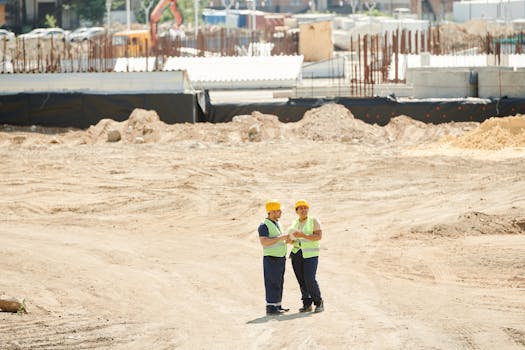
Tradespeople and contractors often work on property they do not own, which means the potential for damage or injury travels with them from site to site. Cover is available for sole traders through to commercial operators, so a one-person operation and a growing company can each find a policy shaped around the work they perform.
Retail, hospitality and service businesses
If customers walk through your door, stand on your floor or sit at your table, the everyday exposures of public liability apply directly. Wet floors, uneven surfaces, stock displays and busy service areas all create the conditions where a slip or trip can happen in seconds.
Manufacturers, importers and suppliers
Anyone who makes, brings in or distributes goods carries a longer tail of risk. Product liability insurance for Australian manufacturers, importers and sellers is built around injury claims, exclusions, recalls and the cover options available. A product you supplied can generate a claim long after the sale, which is why the fine print deserves attention.
Professional and healthcare practices
Businesses that combine a physical premises with advice or treatment face both sides of the risk. Public liability handles injury and property damage connected to your activities, while professional indemnity handles claims about the advice or service itself. The two work alongside each other rather than replacing one another.
Is public and products liability insurance compulsory?
For most businesses, no. Public and products liability insurance is not mandatory for most businesses, although it is recommended for all companies. That general position is not the whole picture though. Contracts you sign, leases you hold and the expectations of the clients you work for can all create a practical requirement to hold cover and to produce evidence of it. Check your own agreements before deciding you can trade without it.
Exclusions, recalls and the questions worth asking
No liability policy is open ended. Product liability conversations commonly centre on injury claims, exclusions, recalls and the range of cover options on offer. Recall costs in particular are treated differently across policies, so it pays to ask directly how a recall would be handled, what triggers a claim under your wording, and whether the work you do falls inside or outside the terms.
If an exclusion is unclear, ask before you buy rather than after a claim lands on your desk. Brokers see the same wording disputes repeatedly, and a short conversation at quote stage usually resolves them.
How much does public and products liability cover cost?
Pricing depends on the business rather than the postcode. Your industry, turnover, the type of work you carry out, where you work, the products you supply and the limit of liability you select all feed into the premium.
A figure that suits one Brisbane cafe tells you very little about a plumbing business or an importer of electrical goods. Limits of liability and pricing are set case by case, so the practical step is to get a quote based on your actual operations rather than a guess from a comparison site.
What a Brisbane broker adds
Business Insurance Consulting is a Brisbane-based brokerage led by Craig Graham, who brings 28 years of experience to the table. The business works with access to more than 150 specialty markets and an insurer panel that includes CGU, QBE, Vero, Allianz, AIG, Chubb, Zurich and NTI. That spread matters, because public and products liability wordings vary between insurers.
Rather than price-comparison convenience, the focus is on local market knowledge and hands-on claims advocacy. If a claim is made against you, having someone in your corner to deal with the insurer can be the difference between a straightforward process and a stressful one.

What to have ready when you request a quote
A little preparation speeds up the process and improves the accuracy of the cover you are offered.
- A plain description of what your business does day to day
- Where you work, including your own premises, client sites and public spaces
- Whether you sell, supply, assemble or import products
- Turnover, staff numbers and any subcontractors you engage
- Contracts or leases that require a specific level of cover
- Any previous claims or incidents, however minor they seemed at the time
The information on this page is general advice only and does not take into account your personal goals or financial situation. Before making a decision about cover, speak with a qualified adviser or contact Business Insurance Consulting to discuss your circumstances.
Frequently Asked Questions
Is public liability insurance compulsory in Queensland?
For most businesses it is not mandatory, although it is recommended for all companies. Some businesses still need it in practice because clients, landlords or contracts require evidence of cover before work begins. Check your own agreements and any industry-specific obligations, then confirm the position for your situation with a broker or adviser.
What is the difference between public liability and product liability?
Public liability responds to third-party injury, death, property damage or loss connected to your business activities, such as a customer slipping on your premises. Product liability responds when a product you sell, assemble or supply has caused harm to a person. Both can sit within a single public and products liability policy.
How much does public and products liability insurance cost in Brisbane?
There is no flat rate. Premiums depend on your industry, turnover, the work you do, whether you supply products, and the limit of liability you choose. A cafe, a plumber and an importer will all be priced differently, which is why a quote based on your own operations is the only useful number.
Does public liability cover injuries to my own employees?
Public liability is aimed at third parties, so injuries to your own employees generally sit outside it and are handled through other arrangements. If you engage subcontractors or labour hire workers, the picture can become less clear, so run your specific staffing setup past a broker before you rely on any assumption.
Does product liability cover a product recall?
Recall costs are treated differently across policies, so this is not something to assume either way. Product liability discussions commonly cover injury claims, exclusions, recalls and the available cover options. Ask your broker how a recall would be handled under the wording you are considering before you commit to it.