
Scaffolding crews around Brisbane move quickly. One week it is a residential re-roof, the next a commercial facade, then an industrial shutdown where the access requirements look nothing like the last job. The structure goes up, gets inspected, gets used, comes down, and the crew moves on. Underneath all that movement sits a set of risks that a standard trades policy was never designed to handle cleanly.
SafeWork NSW defines a scaffold as a temporary structure used to support workers and materials during the construction, maintenance or repair of buildings and other structures. Scaffolding refers to the individual components that, when assembled, form a scaffold, and scaffolding work means erecting, altering or dismantling a temporary structure. Read that definition again and the insurance problem becomes clear: a scaffolding business carries height exposure, public contact, hired plant and constant change, all at once.
Why Scaffolding Businesses Sit in Their Own Risk Category
Most trades have one dominant risk. Scaffolders carry several. Work at height is the obvious one, and it applies to every hour on site rather than to a rare task. Falls from height remain the reason scaffolding sits under close regulatory attention, and that attention flows straight through to how insurers assess a scaffolder’s business.
Public exposure is the second factor. Scaffolds go up over footpaths, driveways, shopfronts and car parks. Members of the public, delivery drivers, residents and other trades walk underneath and alongside the structure all day. A dropped fitting, a loose board or a collapsed section can injure someone who has no connection to the building project at all.
Equipment is the third factor. Standards, ledgers, transoms, braces, base jacks, toe boards, hop-up brackets and lockdowns represent a serious capital investment, and much of it lives on trucks, in yards or on sites that are not yours. Aluminium mobile scaffold towers are sold and hired by suppliers with delivery across Australia, which means plenty of crews work with a mix of owned and hired gear.
The fourth factor is labour. Scaffolding work is often delivered with casual crews, subcontractors and labour hire, and every additional pair of hands changes the liability picture unless the arrangements are properly documented and declared.
What the Safety Framework Says About Scaffolding Risk
WorkSafe Victoria’s scaffolding guidance sits under an industry standard that gives practical advice on the safe design, erection, inspection, use, dismantling and maintenance of scaffolds and scaffolding work. SafeWork Australia publishes national material on scaffolding hazards, and individual regulators such as SafeWork NSW and WorkSafe Victoria maintain their own scaffolding pages. Brisbane operators should confirm current requirements with the relevant Queensland work health and safety regulator, because licensing, inspection and height rules are reviewed and updated over time.
Insurers read the same material your site supervisor does. When a broker presents a scaffolding business to a market, the quality of your safety systems, inspection records and handover documentation often shapes the response as much as the turnover figure does.
The Covers Brisbane Scaffolders Usually Need to Discuss
Cover needs to match the work you actually do, not the label on your ABN. A scaffolding business that erects, alters and dismantles structures for other builders generally needs a different combination of covers from one that also hires out mobile towers or designs access solutions. A broker will typically work through these areas:
- Public and product liability, for injury to third parties and damage to property that is not yours
- Construction and trades insurance packages built for contractors and tradespeople
- Professional indemnity, where advice, design or specification is part of what you supply
- Business insurance covering interruption, management liability, trade credit and event work
- Cyber protection insurance, given how much quoting, invoicing and site documentation now runs through email and cloud systems
- Personal lines such as home and contents, landlord, strata, farm, marine transit and motor
Public and Product Liability: The Cover Clients Ask About First
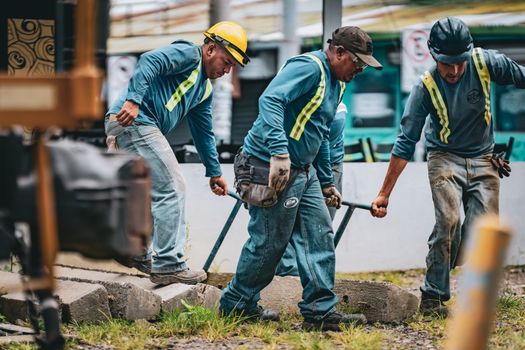
Head contractors, principal contractors and property owners routinely ask for evidence of public liability cover before a scaffold goes up. The cover responds when your business is alleged to have caused injury to a person or damage to property belonging to someone else, which is precisely the scenario a footpath scaffold creates. Product liability extends the same thinking to components or equipment you supply, including hired-out mobile towers.
The important detail is that limits and exclusions vary between policies. Two businesses with the same turnover can end up with very different protection depending on how the work is described on the policy schedule. That description is worth reading carefully before you sign anything.
Construction and Trades Insurance Packages
Packages built for the construction industry usually bundle liability cover with protection for tools, plant and equipment, and they are structured around the realities of contract work. For a scaffolding business, the package needs to reflect the fact that you are often a subcontractor on someone else’s site, sometimes a principal contractor in your own right, and occasionally both on the same day.
How subcontractors are treated matters here. If you engage other scaffolders as subcontractors, their work can create liability that lands on your business, and their own insurance arrangements may not cover you. The right structure is something to confirm rather than assume.
Professional Indemnity Where You Design, Specify or Advise
Not every scaffolding business needs professional indemnity, but more do than realise it. If you assess loadings, recommend a particular access system, design a temporary structure to suit a tricky site, or provide written advice that a builder relies on, you are supplying a professional service as well as a physical one. Professional indemnity responds to claims that your advice or design caused a financial loss, which sits outside what liability cover handles.
If your work stops at erecting and dismantling to someone else’s specification, this may be less relevant. It is a conversation to have with your broker rather than a decision to make alone.

Mobile Towers, Hired Gear and Equipment Stored Off-Site
Scaffold hire is widely available, with national hire companies and specialist suppliers offering pickup and delivery, and that convenience creates a coverage question. Equipment you hire, borrow or store at a depot or on a client’s site can fall outside a standard policy wording, particularly if the gear is not listed or the storage location has changed.
Aluminium mobile scaffold towers are frequently sold as kits with additional components available to build a tower to suit the job, and those kits are typically designed to meet Australian standards with a manufacturer warranty. Warranty protection and insurance protection are different things, and a warranty does not respond when a tower is stolen from a ute tray overnight. Confirm with your broker exactly which equipment, at which locations, is insured.
Business Interruption and Cyber Risks
A scaffolding business can lose income without losing a single structure. A serious incident that closes a site, an injury that removes your leading hand from the roster, or a supplier failure that delays equipment can all slow cash flow. Business interruption cover is designed to respond to that lost trading period rather than the physical damage alone.
Cyber protection insurance covers a different kind of interruption. Quoting systems, progress claims, SWMS records and client correspondence now live in email inboxes and cloud platforms, and a payment redirection scam or a ransomware event can stall a small contractor for weeks. Many trades businesses assume they are too small to be a target, which is exactly the assumption fraudsters rely on.
Insurance and Safety Documentation Go Hand in Hand
The connection between your safety paperwork and your insurance is direct. Inspection records, erection and dismantling procedures, handover certificates and incident registers are the same documents a broker uses to describe your business to an insurer and the same documents that support a claim if something goes wrong. Regulators publish industry guidance on safe design, erection, inspection, use, dismantling and maintenance of scaffolds, and aligning your records with that guidance makes the insurance conversation far easier.
Why a Brisbane Broker Beats a Comparison Site
Scaffolding is not a category that fits neatly into an online quote engine. The work varies, the subcontractor arrangements vary, and the way a policy describes your activities can decide whether a claim lands or gets denied. Business Insurance Consulting is a Brisbane-based brokerage led by Craig Graham, who brings 28 years of experience to the table, and it works with more than 150 specialty markets rather than a single insurer panel.
That panel includes CGU, QBE, Vero, Allianz, AIG, Chubb, Zurich and NTI. The brokerage is a member of the Community Broker Network and Steadfast, holds a NIBA affiliation, and positions itself around hands-on claims advocacy. For a scaffolder, that advocacy matters most on the day a claim is lodged, when someone needs to argue your case to the insurer rather than email you a link to a form.
Steps to Get Your Scaffolding Cover Sorted
- Write down exactly what your business does, including erection, alteration, dismantling, hire, design or advice.
- List your equipment, where it is stored, and what is owned versus hired.
- Document subcontractor and labour hire arrangements, including who insures whom.
- Gather safety records, inspection processes and any licensing or competency evidence.
- Check what your current policy schedule actually says your business does.
- Ask a broker to compare options across markets rather than accepting a renewal notice.
- Confirm the relevant Queensland work health and safety regulator’s current scaffolding guidance before your next site.
Frequently Asked Questions
Do scaffolders in Brisbane need public liability insurance?
In practice, yes. Head contractors, principal contractors and property owners almost always ask for a certificate of currency before allowing a scaffold on site. Public liability responds when your business is alleged to have injured someone or damaged property that is not yours, which is a constant possibility when scaffolding sits over footpaths and driveways.
Is scaffolding insurance different from general trades insurance?
It draws on similar covers but the risk profile is different. Scaffolding involves sustained work at height, public exposure beneath the structure, hired plant and frequent changes of site. A policy written for a general trade may not accurately describe that work, and the description of your activities on the schedule is what determines whether a claim is accepted.
Does my policy cover hired or mobile scaffold towers?
Not automatically. Hired equipment, gear stored at a depot and towers left on client sites can all fall outside standard wordings unless they are listed or the policy is structured to include them. Give your broker a full list of owned and hired equipment, along with the locations where it is kept, so the cover matches reality.
Do I need professional indemnity as a scaffolder?
It depends on what you supply. If you only erect and dismantle to someone else’s specification, liability cover may be enough. If you assess loadings, design access systems, or give written advice that builders rely on, professional indemnity responds to claims that your advice caused a financial loss, which sits outside standard liability cover.
How does safety compliance affect my insurance?
It affects both pricing and claims outcomes. Insurers look at your inspection records, erection and dismantling procedures, handover documentation and incident history when assessing a scaffolding business. Regulators publish practical guidance on the safe design, erection, inspection, use, dismantling and maintenance of scaffolds, and aligning your records with that guidance strengthens your position at claim time.