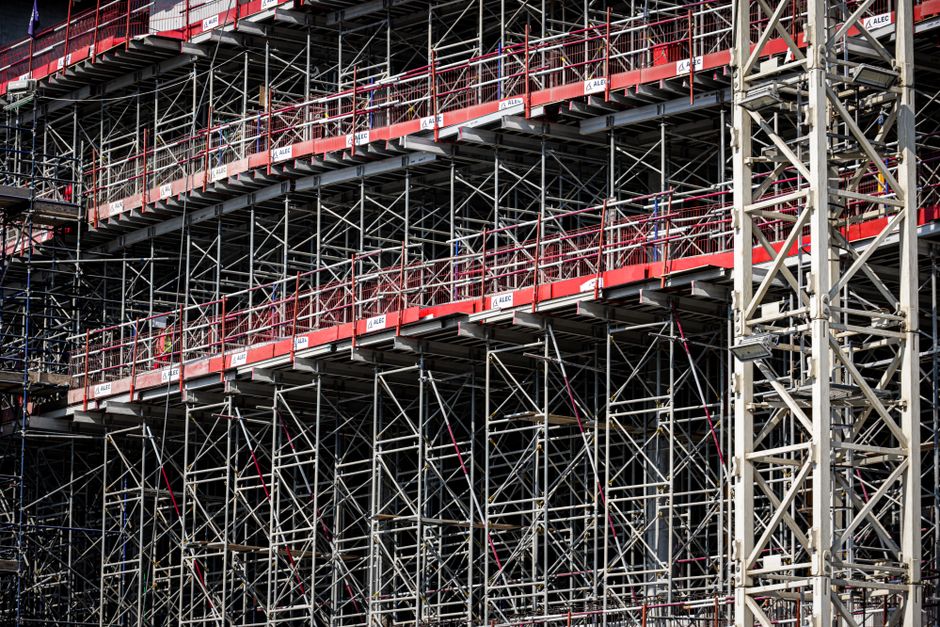
Scaffolding insurance sits in a category of its own, and Queensland underwriters treat it that way. Erecting, altering and dismantling temporary structures puts your business in a position where a dropped fitting, a failed tie-in or a stray tube can injure a passer-by, damage a neighbouring property or shut down a CBD job for days. Standard trade policies are not built for that exposure, and a cheap online comparison quote rarely picks up the difference.
This guide covers what scaffolding insurance typically includes, where the gaps hide, and how the process works when you buy through a Brisbane brokerage with access to more than 150 specialty markets. If you would rather skip straight to pricing and options, you can request a quote from Business Insurance Consulting.
Why scaffolding is not a standard trade risk
Most trades carry one main exposure. Scaffolders carry several at once, and they overlap. Specialist underwriters describe scaffolding as a non-standard trade risk because the work combines working at height, worker-to-worker exposure, third-party property below and around the structure, and commercial or CBD work where a single incident affects multiple parties.
Add the temporary nature of the structure itself and you have a risk profile that changes job to job. A two-storey residential job in Carindale looks nothing like a multi-level commercial project in Fortitude Valley. Underwriters price and word cover around that difference, which is exactly why a purpose-built scaffolding policy beats a generic trades package.
What scaffolding insurance policies usually include
Specialist scaffolding facilities in Australia are built around a core set of covers. Depending on the underwriter and your operation, a program can include:
Public and products liability for third-party injury and property damage
A business package covering the trading side of the business
Plant and machinery cover, including scaffolding equipment
Group personal accident and illness for workers
Individual personal accident and illness for sole traders and principals
Cover for tools and equipment on site, in transit or in storage
Cover that extends to employees, subcontractors and site-specific risks
Latent defects cover in some construction-related placements
The practical value is in how these pieces are stitched together. A scaffolder with employees, subcontractors and a plant list needs a schedule that reflects all three. Below is a simple way to think about which section responds to which problem.
Cover type | What it generally responds to |
|---|---|
Public and products liability | Injury or property damage caused to third parties, including the public and other trades on site |
Business package | The trading risks of running the scaffolding business itself |
Plant and machinery | Scaffolding plant, equipment and machinery owned or hired by the business |
Group personal accident and illness | Income protection style benefits for workers following injury or illness |
Individual personal accident and illness | The same style of benefit for an individual principal or sole trader |
Latent defects | Defects that surface after the work is complete, where the placement allows it |
Public liability limits: what $5 million to $20 million actually means
Scaffolding public liability facilities in Australia advertise limits starting at $5 million and extending to $20 million. The limit is the maximum the insurer will pay for any one claim, and it is the number your head contract usually specifies.
Choosing a limit is not about buying the biggest number available. It is about matching the cover to the jobs you actually take on. A business that only does residential work has a different requirement from one that regularly erects on commercial sites. The right approach is to check the insurance clause in your contract first, then set the limit with your broker so there is no argument if a principal contractor asks for a certificate of currency.
Employees, subcontractors and labour hire
Scaffolding crews are rarely all direct employees. Many Queensland businesses run a small core team, then bring in subcontractors or labour hire to handle peak periods. Underwriters want to know exactly how that works, because the liability exposure shifts depending on who is on the books and who is on the invoice.
Public liability cover is generally drafted to respond to injuries to third parties, and specialist scaffolding facilities commonly state cover for employees, subcontractors and site-specific risks. Personal accident and illness cover sits separately and deals with the financial impact on the people doing the work. If you are unclear about where your subcontractors sit, that is a conversation to have before the first invoice, not after an incident.
Plant, tools and equipment
Scaffolding equipment is expensive, mobile and easy to lose track of. It moves between depots, trucks, storage yards and sites, and it sits unattended overnight more often than most trades would like. Specialist underwriters offer cover that includes plant and machinery, and brokers commonly arrange it as part of a scaffolding program rather than as an afterthought.
Give your broker an accurate schedule: roughly what the gear is worth, where it is stored, and how often it travels between sites. Underinsurance on plant is a common and avoidable problem when a business replaces equipment over time but never updates the schedule that sits behind the policy.
What your head contract will ask for
Principal contractors and builders typically require written evidence of public liability cover before they will let a scaffolding crew on site. That usually means a certificate of currency showing the insurer, the policy number, the limit of liability and the period of cover.
This is where a delay in arranging cover becomes a commercial problem rather than an insurance one. If a certificate cannot be produced on request, work stops. Keep your limit aligned with the contract requirement, keep the certificate current, and have your broker issue updated documentation quickly when a new principal contractor asks for it.
Contract wording varies between builders and projects, so read the insurance clause carefully and confirm anything ambiguous with your broker or legal adviser before signing.
Claims: the part where a broker earns their keep
Claims in scaffolding are rarely simple. There may be several parties on site, competing accounts of what happened, and a dispute about whether the scaffold itself, the method of work or another trade caused the loss. Specialist facilities commonly manage claims through dedicated claims managers and ask for a completed liability claim form with supporting evidence.
A local broker stays in the process. That means helping you complete the paperwork accurately, chasing the claims manager for updates, and pushing back when a reserve is set unfairly. It also means knowing what evidence to preserve in the first 24 hours, including site photographs, incident reports and witness details.
Information underwriters want from scaffolders
A well-prepared submission gets better terms and fewer questions later. Have the following ready when you speak to your broker:
Turnover and the split between residential, commercial and industrial work
Employee, subcontractor and labour hire numbers
The height ranges you typically work at and your maximum
Public liability limit required by your contracts
A plant and equipment schedule with values
Your safety systems and licensing details
Claims history for the past five years

Local knowledge versus a national call centre
Brisbane scaffolding work has its own rhythms. CBD site access, Queensland weather during storm season, and the way principal contractors on major projects structure their contract requirements all shape how a policy should be built. A broker who knows the local market can frame a submission around those realities instead of reading from a script.
Access to more than 150 specialty markets matters too. Not every insurer writes scaffolding, and some that do have narrow appetites. Being able to place the risk with the facility that actually wants it usually beats being told by a call centre that the business is outside the guidelines.
Speak to a Brisbane scaffolding insurance broker
Business Insurance Consulting is a Brisbane brokerage led by Craig Graham, backed by insurer relationships including CGU, QBE, Vero, Allianz, AIG, Chubb, Zurich and NTI, and membership of Community Broker Network and NIBA. If you need a new policy, a renewal reviewed or help with a claim, get in touch.
Business Insurance Consulting | Craig Graham | 0412 212 099 | craig@businco.com.au | Brisbane, Queensland | Get a quote
This information is general advice only and does not consider your personal goals or financial situation. Before making a decision, confirm the details with your broker or the relevant official source.
Frequently Asked Questions
What insurance does a scaffolding business need in Queensland?
Most scaffolding businesses start with public and products liability, then add a business package, plant and machinery cover, and personal accident and illness protection for workers. Businesses with employees, subcontractors and hired equipment usually need all of these sections working together. A broker can confirm the exact combination for your operation, contract requirements and site types.
How much public liability cover do scaffolders need?
Specialist scaffolding facilities in Australia advertise limits from $5 million up to $20 million. The right figure depends on your contracts, the types of sites you work on and the parties sharing the site with you. Check the insurance clause in your head contract and confirm the limit with your broker before a certificate of currency is requested.
Does scaffolding insurance cover subcontractors?
Specialist scaffolding public liability policies commonly state cover for employees, subcontractors and site-specific risks. That said, the treatment of subcontractors varies between underwriters, and personal accident cover sits in a separate section. Always disclose how many subcontractors you use and how they are engaged so your policy reflects the real exposure.
Can I get cover for working at height and CBD jobs?
Yes. Specialist scaffolding liability facilities are built around working at height, worker-to-worker exposure and commercial or CBD work. Underwriters will ask about your maximum working height, your safety systems and your licensing. Providing accurate detail upfront helps your broker place the risk with a facility that actively writes this class of business.
Why use a Brisbane broker instead of a comparison site?
Scaffolding is not a standard trade risk, and comparison sites suit simple products. A broker can access specialty markets, explain what each section actually covers, and advocate for you when a claim is disputed. Business Insurance Consulting works from Brisbane with access to more than 150 markets and hands-on claims support.